
Shitennoji Temple is home to numerous spots steeped in history. Here, we’ve carefully selected some of the must-see locations.
3-1. Kondo (Main Hall): The Unmissable Charm of the Main Hall [Shitennoji Temple Kondo]
Located at the heart of Shitennoji Temple, the Kondo is the central hall of the temple complex.
Inside, the principal image, the Guze Kannon statue, is enshrined, and worshippers offer their prayers.
The current Kondo is believed to have been rebuilt after World War II. While retaining the traditional exterior of a Buddhist temple, the interior incorporates modern architectural techniques, including fire-resistant and earthquake-resistant structures.
The hall exudes a solemn atmosphere, and the murals and statues of the Four Heavenly Kings are truly impressive.
Of particular note is the serene expression of the Guze Kannon, embodying the Buddhist spirit of salvation.
Taking a moment to contemplate it will likely leave you with a sense of spiritual cleansing.
3-2. Chumon Gate: A Magnificent Gate and a Photogenic Spot [Shitennoji Temple Niomon Gate]
The Chumon Gate is located at the southern end of the central temple complex, north of the Nandaimon Gate.
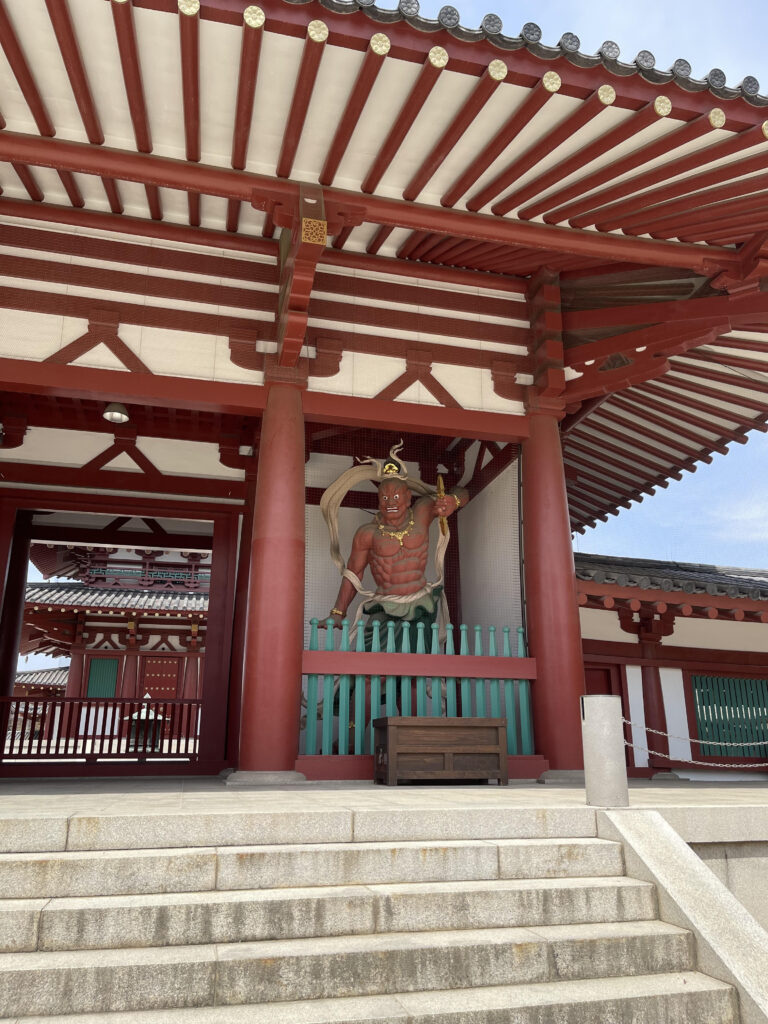
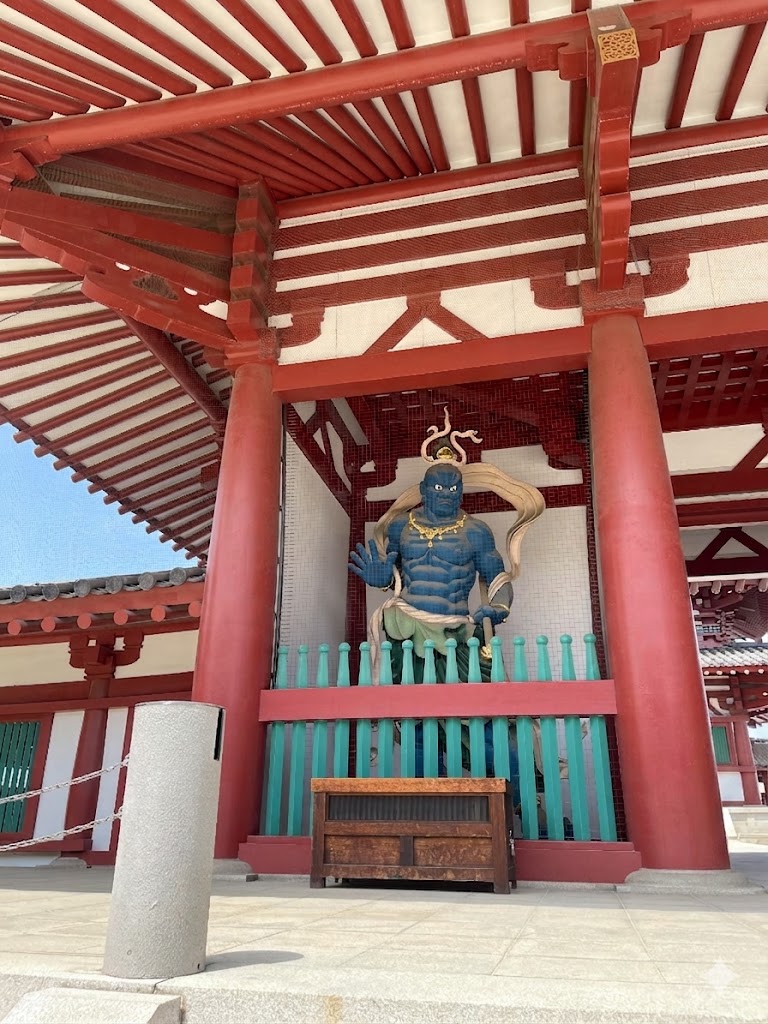
Because the Kongo Rikishi statues (Nio statues) that protect the temple complex are enshrined beside it, it is generally known as the “Niomon Gate.”
The Naraen Kongo Rikishi is positioned on the east side, and the Mitsushaku Kongo Rikishi on the west side. These statues were created by the master craftsmen Matsuhisa Tomoharu and Sorin.
🔹 Kongo Rikishi Statue (Agyo)
🔹 Kongo Rikishi Statue (Ungyo)
The view of the five-story pagoda seen through the main gate (Niomon) is one of the most spectacular sights representing Shitennoji Temple.
🔹 View of the five-story pagoda from beyond the main gate (Niomon gate)
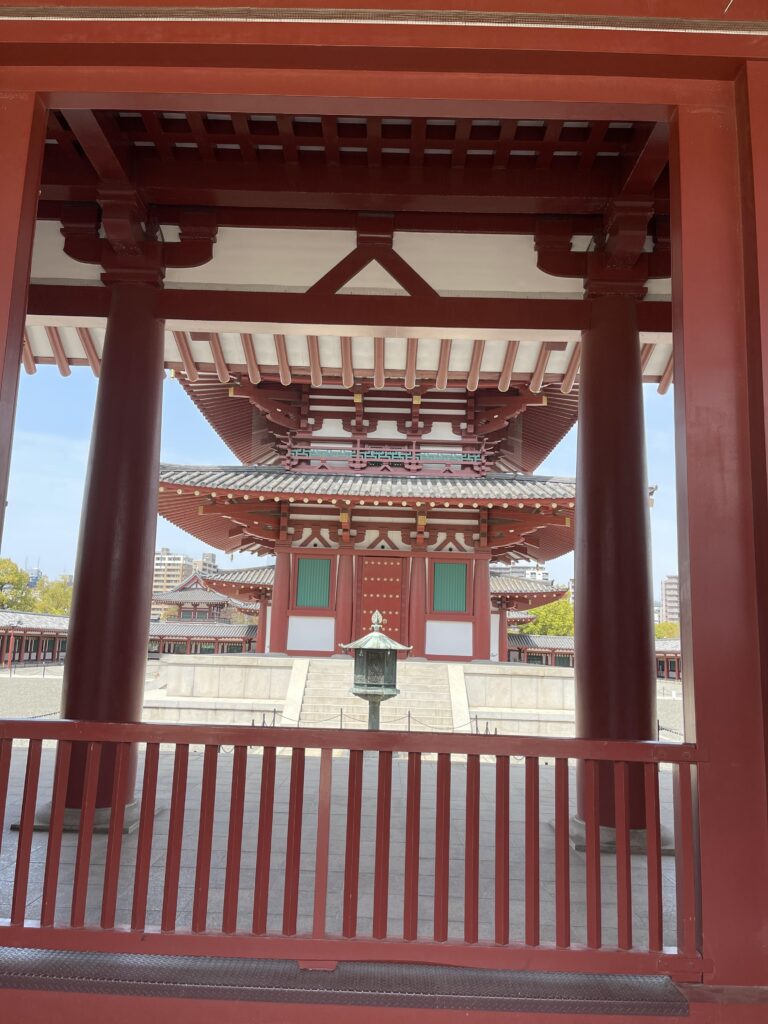
On sunny days, the contrast between the blue sky and the vermilion gate is beautiful, making it a popular “photogenic spot.”
Furthermore, the area in front of the main gate is bustling with many stalls during annual events, and it is a place where you can feel the spirit of popular culture that has existed since ancient times.
3-3. Five-Storied Pagoda and Stone Stage: The History of Symbols and Stages
・Five-Storied Pagoda (Gojū no Tō)
A symbolic presence of Shitennoji Temple. The current pagoda is said to be the eighth generation, rebuilt in 1959. It is approximately 30 meters tall. On special opening days, it is sometimes possible to climb inside, and you can experience the breadth of the Buddhist world while touring the pagoda. The brightly colored appearance of the pagoda is a symbol of faith that has continued since the Asuka period, the ancient capital.
・Stone Stage (Ishibutai)
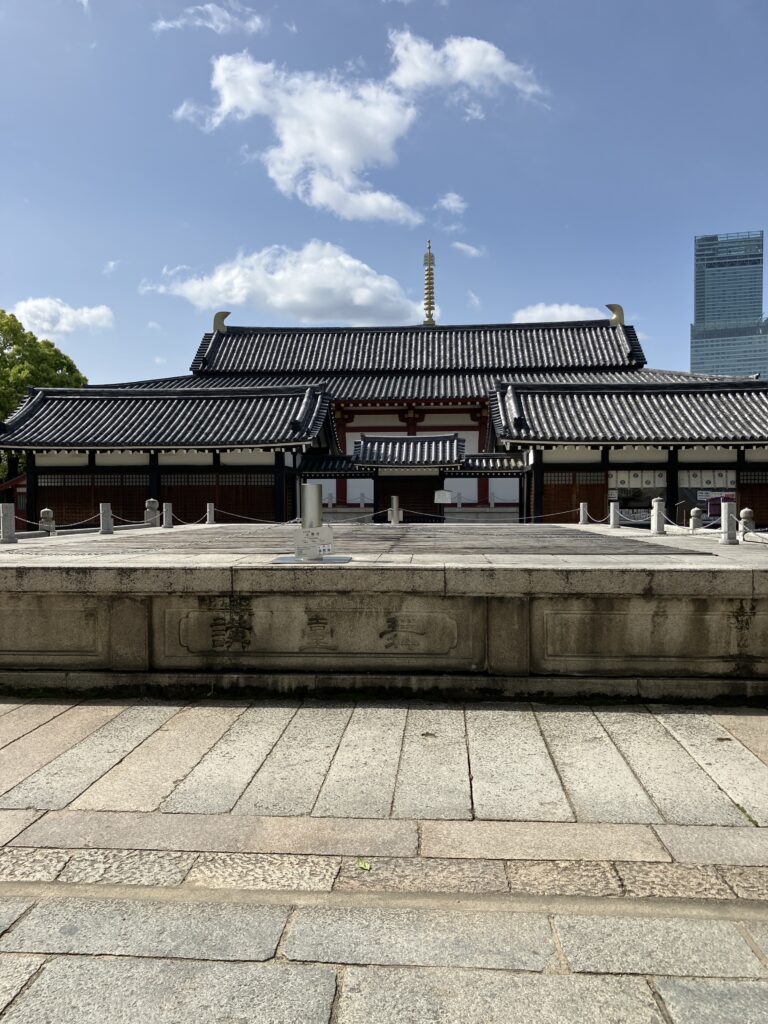
Located near the Five-Storied Pagoda, the “Stone Stage” is a stage where Shitennoji Temple’s unique traditional events and Shinto rituals are performed. Particularly famous is the annual “Shōryōe” (Holy Spirit Festival), where a magnificent Bugaku (court dance and music) performance is presented.
The simple construction, combining natural stones, exudes a robust and unpretentious beauty.
🔹 Ishibutai (Stone Stage)
3-4. Gokurakujōdo no niwa: A Peaceful and Healing Space
“Gokurakujōdo no niwa” is a garden located in the northwestern part of the Shitennoji Temple grounds, recreating the Pure Land as described by Amida Buddha.
🔹 Gokurakujōdo no niwa
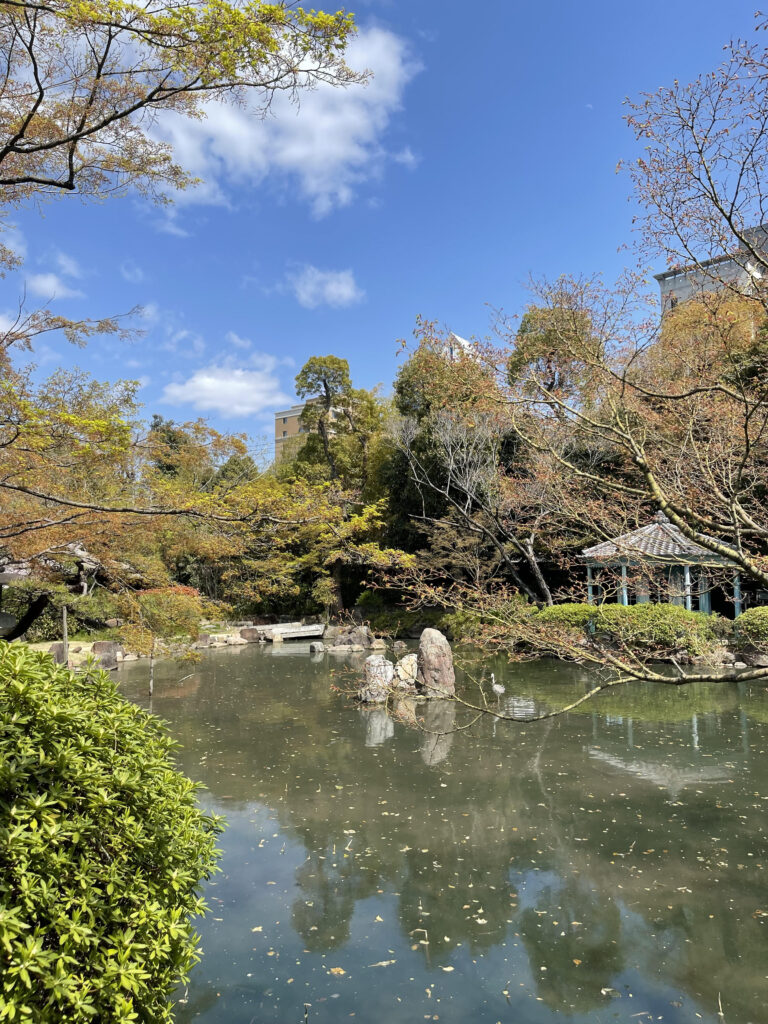
The lush green grounds feature a flowing stream and a profusion of flowers throughout the seasons. The cherry blossoms in spring and the vibrant autumn foliage are particularly breathtaking, offering a truly soothing experience for visitors.
This pond-centered strolling garden allows visitors to leisurely explore and experience the Buddhist concept of “Pure Land.” It’s a precious spot to escape the hustle and bustle of city life and find inner peace.